18.8K
Downloads
254
Episodes
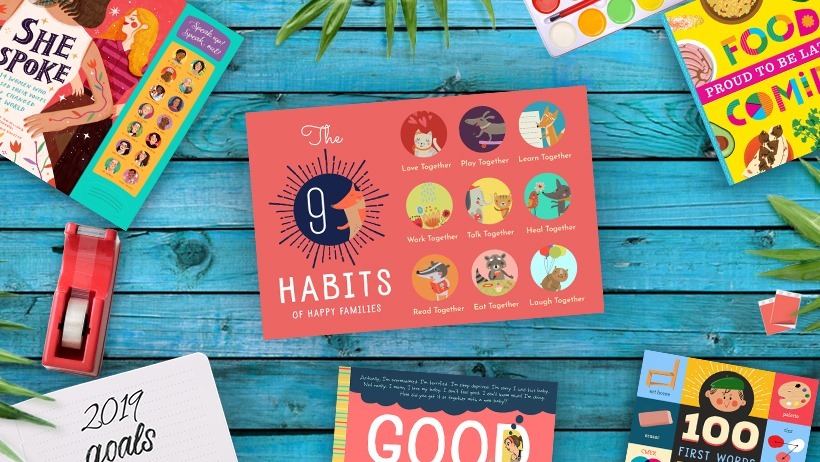
With help from guest authors, experts, and community and business leaders, the Familius Helping Families Be Happy podcast explores topics and issues that connect families to the nine habits of a happy family: love, play, learn, work, talk, heal, read, eat, and laugh together.
Episodes
Apr 1, 2026
Apr 1, 2026
16 min
In this episode, we sit down with Andrew Dutton, a middle school digital media teacher, photographer, and sneaker enthusiast with over 400,000 Instagram followers. Andrew shares his journey from childhood basketball player captivated by athletic footwear to becoming a recognized sneaker photographer and collector. He discusses how he integrates his passion for sneakers into his teaching, using them as conversation starters and creative assignments for his students. The conversation explores the intersection of art, fashion, and function in sneaker culture, as well as Andrew's process for balancing his professional life, family responsibilities, and creative pursuits.
Episode Highlights
00:00:10: Christopher Robbins introduces the Helping Families Be Happy podcast and welcomes guest Andrew Dutton, a photographer and middle school digital media teacher who has built a following of over 400,000 on Instagram through sneaker photography.
00:01:49: Andrew thanks Christopher for having him on the podcast.
00:01:52: Christopher discusses his own limited knowledge of sneakers, mentioning Chuck Taylor
Converse sneakers from his youth and a recent experience unknowingly purchasing Hokas.
00:02:15: Andrew responds that original Chuck Taylor sneakers would probably be worth something nice today.
00:02:23: Christopher shares his story about buying Hoka sneakers without realizing their brand
significance until a fashion-conscious friend pointed it out.
00:03:01: Andrew explains how his love of sneakers began with childhood basketball, watching NBA players on ESPN, and receiving Eastbay catalogs in the mail where his parents would order shoes.
00:03:50: Andrew describes keeping those Eastbay magazines and dreaming about Air Jordan shoes that were too expensive for his family, and how wearing cool basketball shoes after the season made him feel important.
00:04:37: Andrew discusses how the feeling of wearing special shoes has stayed with him into adulthood, now viewing sneakers as wearable art created through collaborative design processes.
00:05:43: Christopher asks when Andrew transitioned from viewing sneakers as products to seeing them as art.
00:05:55: Andrew explains that after college and entering teaching, he began questioning his desire for footwear more deeply and appreciating the artistic process, including hand-sketched designs of early Michael Jordan shoes.
00:07:08: Christopher asks about Andrew wearing different shoes every day as a middle school teacher and how it has become a focal point in his classroom.
00:07:22: Andrew confirms he wears his extensive sneaker collection to class as part of being authentic to himself, using shoes as conversation starters to build relationships and trust with students.
00:08:09: Christopher inquires whether Andrew uses shoes to teach specific principles.
00:08:16: Andrew describes a signature assignment where students design their own dream shoe after mastering Adobe Illustrator and Photoshop, encouraging them to tell personal stories through footwear design.
00:09:32: Christopher praises Andrew for inspiring creative thinking in the next generation and asks about his Instagram account with over 400,000 followers
00:09:55: Andrew explains that his Instagram journey began during the pandemic when he couldn't spend time with friends who shared his interest in sneakers, combining his existing photography passion with his love of footwear.
00:10:40: Andrew details how boredom during COVID led him to experiment with photographing shoes using his camera rather than just taking phone snapshots, combining two passions into a never-ending creative process.
00:11:30: Christopher poses a financial question about how Andrew budgets for purchasing so many shoes on a teacher's salary.
00:11:37: Andrew explains his approach of buying and selling shoes over years of patient collecting, advising that no sneaker is worth going into debt for and describing a carousel system of funding new purchases through sales.
00:12:20: Christopher asks how Andrew balances teaching, parenting two young children, and his sneaker passion.
00:12:31: Andrew describes his routine of working during the day, spending time with family after school, and then unwinding in his basement studio taking pictures after the kids are in bed.
00:13:10: Christopher asks for Andrew's advice to people wanting to lean into their creative passions.
00:13:38: Andrew advises not being afraid of failure, explaining that learning is a process of figuring out what works and doesn't work, and encouraging people to enjoy the creative process rather than expecting immediate mastery.
00:14:31: Christopher asks about Andrew's favorite pair of sneakers
00:14:38: Andrew explains that his favorite changes constantly with new releases, but the Air Jordan 2 model holds special significance as the first signature Jordan shoe he could afford as a junior or senior in high school.
00:15:32: Christopher asks where listeners can find Andrew online
00:15:52: Andrew directs people to his Instagram account at Ad double Sneaks and mentions having a YouTube channel though he's not active there.
00:16:07: Christopher concludes the podcast by thanking Famis for support, encouraging listeners to subscribe and leave reviews, and promoting Andrew's book "The Art of the Sneaker: Form and Function through the Lens of a Collector"
Key Takeaways
- Passion can evolve from childhood interests into meaningful adult pursuits that combine multiple skills and interests, as Andrew's love of basketball footwear developed into professional photography and teaching.
- Authenticity in professional settings, such as bringing personal interests into the classroom, can be a powerful tool for building relationships and engaging students in creative learning
Creative hobbies can be financially sustainable through strategic buying and selling, rather than requiring unlimited resources or going into debt. - The key to pursuing creative passions is overcoming fear of failure and embracing the learning process, understanding that mastery takes time and experimentation.
- Sneakers represent more than functional footwear—they embody design artistry, cultural significance, personal expression, and storytelling through material choices, colors, and collaborative creative processes.
- Work-life balance is achievable by intentionally scheduling creative time as a form of personal
rejuvenation, rather than viewing hobbies as competing with family responsibilities.
Quotable Moments
- "I don't wanna separate who I am from what I'm teaching, so like, I'm gonna be myself, whether, you know, I'm talking to you on a podcast or whether I run into you in the grocery store or whether I'm teaching kids in the classroom, I'm, I wanna be myself all the time."
- "No sneakers worth going into debt for, so please don't do that."
- "My unwind time and my mind freeing activity is just taking pictures."
- "Don't be afraid of failing, because I feel like that's the biggest hurdle that people have to get over is if you start something and you do what you're creatively pursuing and you think that it's not good quality or it doesn't meet whatever standard that you have in your mind, you're just starting. It's okay."
- "Learning's not an easy process. It's a process of figuring out what works and what doesn't work. And if you can learn to enjoy that process, then your creativity will just continue to blossom because you're having fun figuring things out."
Mar 18, 2026
Mar 18, 2026
20 min
In this episode, Christopher Robbins speaks with Lee Wind, Chief Content Officer for the Independent Book Publishers Association (IBPA), about the vital role independent publishing plays in bringing diverse voices and stories to readers. They discuss IBPA's history and mission, the advantages of mission-driven publishing over purely profit-driven models, and how independent publishers create communities around their content. The conversation also addresses the concerning trend of book banning and censorship, and IBPA's innovative "We Are Stronger Than Censorship" program that buys and donates two books for everyone book challenged. Lee provides valuable advice for aspiring authors and publishers, emphasizing the importance of professional development and community collaboration in the independent publishing world.
Episode Highlights
00:00:10: Christopher Robbins introduces the Helping Families Be Happy podcast and himself as co-founder of Familius, husband, father of nine, author, and various outdoor enthusiast based in California's Central Valley.
00:00:59: Introduction of guest Lee Wind as Chief Content Officer for the Independent Book Publishers Association (IBPA), the largest trade association for publishers in the United States.
00:01:13: Lee's personal mission described as writing books that would have changed his life as a gay Jewish kid and teen, including his award-winning non-fiction books "No Way They Were Gay" and "The Gender Binary Is a Big Lie."
00:01:35: Discussion of the "We Are Stronger Than Censorship" program that buys and donates two books to offset every one book challenged, run by IBPA with the American Library Institute and over 75 industry partners.
00:01:59: Lee expresses enthusiasm about joining the podcast to discuss book publishing.
00:02:12: Christopher shares his history with IBPA, having served on the board and participated in strategy that helped the organization grow.
00:02:34: Lee explains IBPA's origins in 1983 when about a dozen Southern California publishers pooled resources to send one representative to a major New York trade show.
00:03:27: Discussion of how IBPA has evolved while maintaining its core mission of advocacy, education, and tools for success to level the playing field for independent publishers.
00:04:15: Lee emphasizes the importance of independent publishing to prevent four or five corporations from deciding what everyone reads, highlighting the diverse and mission-driven approaches of independent publishers.
00:05:21: Christopher encourages the audience to explore independent books, music, and film as sources of exceptional content.
00:05:35: Christopher shares a personal memory of Jan Nathan, IBPA's founder, inviting him to dinner in 1990 and being welcoming and encouraging to him as a young industry newcomer.
00:06:20: Lee discusses how mission-driven independent publishers differ from corporate publishers focused solely on financial bottom lines, using examples like Patagonia and Just Us Books.
00:06:53: Christopher compares this to Familius's philosophy that revenue is simply fuel for the mission.
00:07:26: Lee explains how independent publishers understand the power of community and niche markets better than corporate publishers, with four out of five books in bookstores from corporate publishers but that fifth book representing hundreds of different independent voices.
00:08:38: Discussion of the advantages of direct-to-consumer sales for publishers vs. sales through major retailers like Amazon, where publishers don't own the customer relationship.
00:09:31: Lee cites Brandon Sanderson's successful Kickstarter campaign as an example of authors leveraging their platform and community.
00:09:45: Christopher mentions that Brandon Sanderson teaches at his alma mater BYU and that his niece has been one of Sanderson's test readers.
00:09:56: Lee shares that some of Brandon Sanderson's BYU lectures on topics like world building are available on YouTube.
00:10:15: Christopher discusses how Famis provides value to nearly 50,000 engaged subscribers through biweekly free content about helping families be happy.
00:10:45: Christopher acknowledges the highly competitive nature of the book industry, particularly regarding physical shelf space where getting one book on a shelf means removing another.
00:11:14: Lee shares IBPA's motto "helping each other achieve and succeed" and explains that bookstore sales are actually a small portion of most publishers' revenue.
00:12:09: Discussion of how quality books naturally generate word-of-mouth marketing and how AI- generated content makes quality even more important.
00:12:48: Christopher introduces the topic of book banning and censorship through Famis's book "Down with Lime Books," expressing his discouragement with how some have weaponized religion to deny people their own voice.
00:13:59: Lee agrees that while parents should have input into what their own children read, they shouldn't control what other people's children read.
00:14:53: Lee explains that book banning creates a chilling effect that makes schools and libraries afraid to bring in diverse books, resulting in sales drops of up to 50% for some independent publishers focused on marginalized voices.
00:15:55: Lee provides the example of "Everywhere Babies" illustrated by Marla Frazee, which depicts diverse families including same-sex parents and has been called pornography despite being innocent family scenes.
00:17:02: Christopher simply states "love your neighbor" as his religious perspective on book banning.
00:17:08: Lee describes meeting with Dr. Tessel Magnusson and creating the offensive strategy of buying and donating two books to offset every one book challenge.
00:18:10: Christopher shares that he always recommends aspiring authors get involved with IBPA to help them succeed.
00:18:35: Lee explains that IBPA helps people become professional publishers, with membership
including about 1,200 authors who publish their own work and 2,000 independent companies of various sizes.
00:19:35: Lee directs people to his personal website at LeeWind.org and IBPA's website at ibpa-online.org.
00:20:04: Christopher concludes by thanking Familius for supporting the podcast and encouraging listeners to subscribe, leave reviews, and choose independent books for their next reading adventure.
Key Takeaways
- Independent publishing is essential for maintaining diversity in what people read, preventing a handful of corporations from controlling all published content.
- Mission-driven publishing creates different outcomes than purely profit-driven publishing, allowing publishers to maintain control over their values and production methods.
- Building a community around your content and selling directly to consumers creates stronger relationships and more sustainable success than relying solely on major retailers.
- Book banning is not about the content of specific books but rather an attempt to create a chilling effect that erases diverse identities and perspectives from libraries and schools.
- Quality content will ultimately win out even in an age of AI-generated material, as authentic books generate word-of-mouth recommendations that drive long-term success.
- The "We Are Stronger Than Censorship" program demonstrates how the publishing community can go on offense against book banning by buying and donating two books for every 1 book challenged.
- Aspiring authors and publishers should join professional organizations like IBPA for business guidance while also developing their craft through specialized groups like the Society of Children's Book Writers and Illustrators.
- Independent publishers understand niche markets better than corporate publishers, creating content that serves specific communities rather than trying to appeal to the broadest possible audience.
Quotable Moments
- "The idea of only four or five corporations deciding what everyone reads is a really terrible idea."
- "If the bottom line is financial, it's a very different outcome than if the bottom line is a mission, a vision for our to make our world a better place through books."
- "The revenue that we generate is simply fuel for the mission."
- "The magic of it is that if you have a community, if you have a niche and or niche and you're publishing books that are what those people really want, then that's sort of the recipe for success."
- "We have a motto at IBPA, it's helping each other achieve and succeed."
- "In this age of AI slop that we are on the cusp of, it's nice to know that quality will win out."
- "The idea that I should be able to control what your kids read is really wrong."
- "They're attacking books because books help people have empathy and I think that empathy is in short supply these days."
- "Love your neighbor."
- "We don't have to just sit back and let this ridiculousness continue. We can fight back"
Mar 4, 2026
Mar 4, 2026
12 min
In this episode, host Christopher Robbins welcomes Kelly Conroy, a picture book writer and poet who is the cousin of Jan and Stan Berenstain, creators of the Berenstain Bears. Kelly discusses her new children's board book "I See You in the Stars," which explores the twelve signs of the zodiac in a fun, educational way for families.
The conversation delves into how Kelly was inspired to create a rhyming guide to help people memorize the zodiac signs, similar to learning the 50 states alphabetically. Kelly shares fascinating astronomical facts about how the zodiac constellations work, including the surprising detail that you cannot see your own birth constellation during your zodiac period because the sun blocks it from Earth's view.
The episode emphasizes learning together as a family and finding positive attributes in each zodiac sign to build self-esteem and connection to the universe.
Episode Highlights
00:00:10: Christopher introduces the Helping Families Be Happy podcast and welcomes guest, Kelly Conroy, a picture book writer who is 50% silly fun-loving kid and 50% analytical former actuary, and cousin to the creators of the Berenstain Bears.
00:01:39: Kelly thanks Christopher for having her on the podcast.
00:01:40: Christopher asks Kelly about the inspiration behind her children's book "I See You in the Stars," which explores the signs of the zodiac.
00:01:53: Kelly explains she's always been fascinated by stars, astronomy, and astrology from a place of curiosity rather than expertise, and was inspired by a song that helps people memorize all 50 states alphabetically to create a similar rhyming system for the zodiac signs.
00:02:33: Christopher shares that he used to know all 50 states but couldn't name all 12 zodiac symbols anymore, though he knows he's a Sagittarius and has noticed common traits among people with that sign.
00:02:56: Kelly humorously notes that Sagittarius was the hardest sign to find positive aspects for, describing them as strong-willed and focused on doing what they want, which are great qualities but not always easy for others, relating it to her oldest son who is also a Sagittarius.
00:03:18: Christopher agrees that every Sagittarius he's met is very strong-willed and finds ways to do what they want, though these traits can be tempered.
00:03:32: Kelly adds that Sagittarians are also honest and funny, which is what she focused on in the book.
00:03:37: Christopher asks Kelly to explain how she added descriptions and characteristics to make the zodiac rhyme work in her book.
00:03:53: Kelly describes her process of starting with just the signs, then adding details like describing Scorpio as having a "forceful tale," and eventually expanding to include symbols, positive characteristics, and seasons as readers wanted to know more about their signs.
00:04:35: Christopher asks Kelly to help explain where the zodiac sign symbols come from and what they represent.
00:04:49: Kelly explains that the zodiac starts with Aries on the first day of spring, and the way zodiac signs work is that the constellation is opposite the sun from Earth's standpoint, meaning it's the one you can't see during that period.
00:05:48: Christopher realizes and confirms with Kelly that during his birth month in November, he cannot see the Sagittarius constellation because the sun blocks it.
00:06:21: Kelly clarifies that while you can't see your constellation during your sign period, astrologers say "the sun is in Sagittarius" during that time.
00:06:34: Christopher finds this information really interesting and realizes most people probably didn't know this fact, which also explains the relationship between zodiac signs and seasons.
00:06:47: Kelly confirms that Sagittarius is a fall sign, with winter starting in December.
00:06:48: Christopher asks Kelly about the most interesting things she learned during her research about the zodiac or people's interest in their signs.
00:07:07: Kelly shares that more people were excited to learn about their signs than she expected, and if she left out details of any sign, someone with that sign would ask about it, noting that the book applies to everybody rather than having separate books for each sign.
00:07:53: Christopher asks for confirmation that Kelly said Sagittarians have a personality trait of being funny.
00:07:57: Kelly confirms that Sagittarians are honest and funny.
00:08:00: Christopher jokes that he knows a few Sagittarians who aren't funny at all but acknowledges he is funny so it works for him.
00:08:13: Kelly clarifies that astrology isn't a science like chemistry.
00:08:14: Christopher asks Kelly what sign she is.
00:08:16: Kelly reveals she's a Gemini, the twins, and explains they can have high and low emotions, describing herself as usually either hyper or asleep.
00:08:29: Christopher asks if Kelly has enough information to quickly go through each sign and give the key attribute for each.
00:08:39: Kelly goes through all twelve zodiac signs with their key attributes: Aries are purposeful, Taurus are loyal friends, Gemini are social and playful, Cancer are kind and caring, Leo are good at sharing and leading, Virgo are organized, Libra are balanced, Scorpio are forceful and strong-willed, Sagittarius are honest and funny, Capricorn are focused, Aquarius are studious, and Pisces are sympathetic.
00:09:55: Christopher asks Kelly which sign she would choose to be if she could pick any other than Gemini.
00:10:00: Kelly says she would choose Virgo because the Virgos she knows get stuff done and it would be nice to check more things off her to-do list.
00:10:11: Christopher notes that we can learn from everyone around us and adopt their good attributes while working to improve ourselves.
00:10:33: Kelly shares that her goal aligns with Familius's mission—she wants to make people smile and hopes the book gives people self-esteem and confidence, helping them see they're part of the universe and appreciate the good parts of themselves, their family, and friends.
00:11:05: Christopher notes this aligns with their mission to help families be happy no matter what kind of family they have, then asks where guests can find Kelly online.
00:11:14: Kelly shares that her website is kellyconroy.com and she's most active on Instagram @kellyconroybooks.
00:11:31: Christopher encourages everyone to pick up "I See You in the Stars" published by Familius releasing December 2025, thanks Familius for supporting the podcast, and asks listeners to subscribe and leave reviews, concluding that one zodiac sign at a time, we can make the world a happier place.
Key Takeaways
- Zodiac constellations are positioned opposite the sun from Earth's perspective during their respective periods, meaning you cannot actually see your own birth constellation during your zodiac sign's time frame.
- The zodiac calendar begins with Aries on the first day of spring and progresses through the seasons, with each sign aligned to specific times of the year.
- While astrology isn't a hard science, exploring zodiac signs can be a fun way for families to learn together, build self-esteem, and appreciate positive personality traits in themselves and others.
- Creating educational content for children works best when it's accessible to everyone rather than segmented, and adding rhyme and rhythm helps with memorization and engagement.
- Teaching children about astronomy and their connection to the universe can help them develop confidence and a sense of belonging to something larger than themselves.
Quotable Moments
-"My goal in life is to make people smile."
-"When I realized that Sagittarius and Aquarius rhyme, I knew I was gonna be able to pull it off."
-"The constellation is opposite the sun from the standpoint of the earth at that time. So it's the one you can't see."
-"More people were excited to learn about their signs than I thought they were."
-"The whole universe is one universe, we're part of the universe. It's all the same matter, and it's just amazing and wonderful."
-"One zodiac sign at a time. We can make the world a happier place."
Feb 18, 2026
Feb 18, 2026
12 min
In this episode, Christopher Robbins interviews Richard Hill, the first adoptee to identify his birth family through genetic genealogy. Hill is the author of Finding Family: My Search for Roots and the Secrets in My DNA .They discuss DNA testing for ethnic ancestry, exploring why results often surprise people due to the randomness of DNA inheritance and thousands of years of human migration and mixing. Richard explains the differences between major testing companies' databases, recommends 23andMe for ethnicity testing based on his research, and addresses common questions like why Native American ancestry often doesn't show up in tests. The conversation emphasizes that while ethnicity results are interesting, the real value lies in genetic matching for genealogy and finding biological relatives.
Episode Highlights
00:00:09: Christopher Robbins welcomes listeners to the Helping Families Be Happy podcast and introduces himself as co-founder of Familius Publishing, husband, father of nine, and Central Valley California resident.
00:01:12: Richard Hill shares that he has been married for 57 years and lives in Michigan with his wife and two cats.
00:01:14: The episode focuses on DNA testing, ethnicity, family history, and available resources and strategies for exploring roots and branches, aligning with Familius habits of Learn Together and Love Together.
00:01:45: Richard thanks Christopher for having him on the podcast to discuss DNA testing.
00:01:47: Christopher asks Richard to explain what DNA testing for ethnic ancestry is.
00:01:51: Richard explains that over 53 million DNA tests have been done by companies like Ancestry, 23andMe, Family Tree DNA, and MyHeritage, with about half at Ancestry which has the biggest database.
00:03:31: Christopher asks how people get tested and why many are surprised by their results.
00:03:39: Richard describes the testing process involving ordering a kit online, either spitting saliva into a tube or rubbing cheek swabs, then sending it back for results in a few weeks.
00:04:33: Richard explains the randomness of DNA inheritance, noting that while you get 50% from each parent, which 50% is random, meaning you may not get an even 25% from each grandparent.
00:05:32: Richard discusses how ethnic groups have been mixing for thousands of years, using Vikings as an example of migration patterns that occurred over a thousand years ago throughout Europe.
00:06:20: Christopher summarizes that different company databases and DNA randomness explain why siblings might see different results.
00:06:38: Richard confirms that each child is a different conception with a different random mix, so siblings might get vastly different percentages from the same grandparents.
00:07:09: Christopher asks why Native American ancestry often doesn't show up in DNA tests despite family histories suggesting it.
00:07:21: Richard explains that Native Americans originally migrated from Asia 10-20,000 years ago, but have been mixing with Europeans for 400-500 years, diluting the distinctive DNA signature.
00:08:47: Christopher asks which companies Richard recommends for ethnicity testing given the different databases.
00:09:04: Richard describes his popular presentation comparing DNA ethnicity estimates using his wife as a test subject since she is 50% Croatian through her father's parents.
00:10:14: Christopher asks why this information is important beyond curiosity and what people can do with it.
00:10:32: Richard emphasizes that genetic matching for finding relatives and common ancestors is more important than ethnicity results, though ethnicity can provide clues about which family branch connects you to matches.
00:11:16: Christopher asks where listeners can find Richard online.
00:11:34: Richard shares his website: DNAfavorites.com.
00:11:38: Christopher concludes by thanking Famis for support, encouraging listeners to subscribe and leave reviews, and reminding them that one step at a time they can make the world a happier place.
Key Takeaways
- DNA inheritance is random, meaning siblings can receive vastly different percentages of DNA from the same grandparents, leading to surprising ethnicity results.
- Ethnicity estimates are not as accurate as genetic matching because they're based on reference populations that vary by company and are affected by thousands of years of human migration and mixing.
- Native American ancestry often doesn't appear in DNA tests because most Native American populations have mixed extensively with Europeans over the past 400-500 years, diluting the distinctive genetic signature.
- Different DNA testing companies have different databases and reference populations, which significantly impacts ethnicity results; 23andMe currently provides the most accurate ethnicity estimates based on comparative testing.
- The primary value of DNA testing lies in genetic matching to find relatives and trace family trees rather than in ethnicity estimates, which serve more as interesting supplemental information.
- Over 53 million DNA tests have been conducted, with Ancestry holding the largest database at approximately half of all tests.
Quotable Moments
- "I was the first adoptee to identify his birth family through genetic genealogy, DNA."
- "There's over 53 million tests have been done nowadays, and about half of them at Ancestry, which has the biggest database."
- "You get 50% of your DNA from your mother, but which 50% is random."
- "The ethnic groups have been mixing for thousands of years. A good example is the Vikings."
- "Today's Native Americans pretty much most of 'em all have a mixture of ancestry. They don't have just that pure original Native American ancestry."
- "To me the main information that is the most useful is the genetic matching. Who are you related to?"
- "One step at a time, one genealogical tree at a time, you can make the world a happier place."
Feb 4, 2026
Feb 4, 2026
27 min
In this inspiring episode, former world surfing champion Shaun Tomson shares his powerful methodology for finding purpose and transforming mindset during challenging times. Tomson discusses the creation of his book,"The Surfer and the Sage," co-written with philosopher Noah benShea during COVID-19, which addresses the widespread feelings of stress, anxiety, depression, and disconnection. He introduces "The Code" - a transformative 12-line exercise where each line begins with "I will" - that has helped millions worldwide shift from negative to positive mindsets. Through compelling storytelling, including the beautiful "Sacred Story
Stone" legend, Tomson demonstrates how personal transformation comes not from inspirational words of others, but from writing and sharing our own words of commitment and purpose.
Episode Highlights
00:00:10: Christopher Robbins introduces the Helping Families Be Happy podcast and welcomes Shaun Tomson, former world surfing champion, leadership mentor, entrepreneur, and author of "The Surfer and the Sage."
00:01:09: Tomson explains his work as an ambassador for Boys to Men mentoring and the annual 100 Wave Challenge fundraiser that guides boys through their journey to manhood.
00:01:54: Tomson shares the origin story of "The Surfer and the Sage," describing how he met co-author Noah benShea during COVID and conceived the book concept in just five minutes.
00:02:43: Tomson describes his interactive presentations where he asks audiences to text words describing how they're feeling, creating word clouds that revealed widespread stress, anxiety, depression, and disconnection even among fully employed workers at successful companies.
00:03:39: Discussion of how the book addresses the "sad mind state" and creates 18 chapters (a sacred number in Judaism) designed as journeys from darkness to light, despair to hope, and powerlessness to empowerment.
00:05:25: Tomson expresses gratitude for the book's impact across multiple sectors, from Kellogg
Business School to Harvard Kennedy School to large resort groups in Mexico, demonstrating its universal appeal.
00:06:11: Christopher asks Tomson to share what he tells audiences to help them find greater purpose in turbulent times.
00:06:48: Tomson emphasizes the power of storytelling over facts and data, citing Stanford research showing stories are remembered 27 times more than data, and explains that stories serve as both mirrors and windows for people.
00:07:49: Description of Tomson's presentation structure: telling four key stories about the Code's origin, perseverance and resilience, courage and commitment, and deep emotional connectivity.
00:08:49: Tomson explains the Code writing process where everyone writes 12 lines beginning with "I will" in 12 minutes, then shares their codes with the group.
00:09:38: Discussion of how the Code reveals the two halves of life's meaning and purpose: "I'll be better" and "I'll help others be better," with participants texting lines from their codes that display positive values.
00:10:24: Tomson defines purpose as "a committed intention to realize goals that are meaningful for oneself and for the broader world."
00:11:21: Description of the transformation that occurs during presentations, with mindset shifting from 80-90% negative at the beginning to 99-100% positive by the end.
00:12:52: Discussion of how great leaders' words inspire but personal transformation requires writing one's own words, with reference to JFK's famous quote (originally from Cicero).
00:13:46: Tomson explains that the Code method is "open source" and can be used by anyone, particularly families, to bring people together around shared purpose.
00:14:18: Christopher sets up the context that the episode will air at the beginning of 2026 and asks for a story to help engage listeners in the new year.
00:14:39: Tomson introduces his mission to create a "positive wave tribe" with the simple formula: "Drop a stone, create a ripple, build the wave"
00:15:45: Tomson begins telling the Chumash legend of the Rainbow Bridge, explaining how the
Chumash people lived in Santa Barbara 13,500 years ago before any Western religion developed.
00:16:48: The legend describes how the earth mother planted a magic seed on Santa Cruz Island, and people crossed a rainbow bridge to the mainland, with those who looked down being transformed into dolphins.
00:17:28: Description of Hammonds Reef and Shaa Meadow, dedicated to the Chumash people, with its memorial bearing the inscription "The sacredness of the land lies in the mind of its people."
00:18:20: Tomson shares a personal story of visiting the beach with his son Matthew, where they were the only two people present.
00:19:04: Matthew creates a sacred story circle out of cobblestones with a stick decorated with feathers and kelp, establishing a rule that whoever holds the stick tells the story while the other listens.
00:20:09: Tomson reflects on this as one of the best times he's ever had on a beach, emphasizing the deep emotional connection created and how rare such moments are in modern life dominated by cell phones.
00:21:02: Matthew reveals he kept a "sacred story stone" from the circle, explaining that all their stories are contained within it, demonstrating the concept of "speaking in spirit language."
00:21:53: Discussion of the Hawaiian concept of "mana" (life force) and how ancient Hawaiians believed it could be contained in inanimate objects.
00:23:17: Christopher thanks Tomson for the beautiful story and asks where listeners can find the Code worksheet online.
00:23:37: Tomson directs listeners to shauntomson.com where they can download the Code worksheet for free and use it with families, sports teams, business groups, or educational settings.
00:24:41: Tomson shares a testimonial from a tech company CEO who credited writing his Code seven years earlier with inspiring him to start his company, which had just reached unicorn status (billion-dollar valuation).
00:25:30: Tomson reflects on the journey that began with empowering students facing an environmental problem at Rincon surfing beach, leading to collaboration with Professor Patrick Moser and the publication of Surfer's Code.
00:26:25: Christopher concludes by thanking Familius for supporting the podcast and encouraging
listeners to subscribe, leave reviews, and explore Familius books.
Key Takeaways
- Stories are 27 times more memorable than facts and data, making storytelling essential for creating lasting impact and inspiration.
- The Code method - writing 12 lines beginning with "I will" - provides a simple yet powerful tool for finding and defining personal purpose that can shift mindset from negative to positive
True purpose encompasses both personal growth ("I'll be better") and service to others ("I'll help others be better"), creating meaning that extends beyond ourselves. - Personal transformation requires using your own words rather than relying solely on the inspirational words of others - "words of great leaders inspire us, but your own words transform."
- Deep emotional connectivity through practices like creating "sacred story circles" with family members combats the disconnection epidemic created by technology and modern lif.
- Purpose is defined as "a committed intention to realize goals that are meaningful for oneself and for the broader world."
- The simple formula "Drop stone, create a ripple, build the wave" encapsulates how individual actions of purpose can create collective positive change.
- Writing and sharing personal codes with family members creates powerful bonding experiences and helps establish shared values and commitments.
Quotable Moments
- "Facts and data don't move people. And I have found that, that if you tell a story, it brings people close to you. And a story is both a mirror and a story is a window.""Stories are remembered 27 times more than data. So you want to get someone to remember something,
tell 'em a story." - "If you want to inspire people, tell them a story. But if you want people to create personal transformation, they have to use their own words."
- "The sacredness of the land lies in the mind of its people."
- "Dad, this is a sacred story circle and we're gonna sit inside the sacred story circle on the rocks and we're gonna tell each other stories. He said, there's just rule. Whoever's got a stick the story and what does the other person do? The other person just listens."
- "We think the cell phone is a tool of connection when often the cell phone's a tool of disconnection and we just need to turn it off."
- "When you spoke to your son, the Hawaiians call it speaking in spirit language."
- "Every line of the code is a story. Every line of the code that people write is a sacred story. Every line begins with I will. That's a promise."
- "Words of great leaders inspire us. You want words of transformation? Write your code, your own words, because your own words transform others inspire your own words."
- "Purpose. A committed intention. That's what purpose is. A committed intention to realize goals that are meaningful for oneself and for the broader world."
Jan 21, 2026
Jan 21, 2026
15 min
In this episode of the Helping Families Be Happy Podcast, host Christopher Robbins speaks with award-winning author Jessica Spear about the critical challenges of social media and AI safety for teens and preteens. They discuss the irrefutable data showing how social media is negatively impacting youth mental health, the emerging concerns around AI companions and chatbots that teens are using for emotional support, and practical strategies parents can implement to protect their children. Jessica emphasizes the importance of ongoing conversations, coming from a place of curiosity rather than judgment, and creating family tech plans together. The discussion highlights that while technology offers benefits, current platforms lack adequate safety guardrails for young users, making parental engagement essential.
Episode Highlights
00:00:10: Christopher introduces the podcast and welcomes guest, Jessica Spear, an award- winning author specializing in books for preteens and teens about friendships, safety, and technology use.
00:01:47: Jessica thanks Christopher for the introduction and expresses enthusiasm about tackling the important topic of social media and AI safety for young people.
00:01:56: Christopher praises Jessica's book "The Phone Book" and recommends it for every family with children who have smartphones.
00:02:03: Jessica explains that while her book is written for preteens and early teens, it's really for all families and encourages parents to read it alongside their children to facilitate conversations about navigating technology.
00:02:26: Christopher references Jonathan Haidt's book "The Anxious Generation" and notes that global statistics show teens and preteens are suffering due to social media abuse, then asks Jessica what parents need to know to help children stay safe.
00:03:01: Jessica acknowledges the nerve-wracking nature of parenting in the tech age and emphasizes that helping kids navigate technology is one of the biggest parenting challenges today, requiring lots of conversations starting early and happening often.
00:04:18: Christopher notes that social media can be problematic even for adults, interfering with real life.
00:04:26: Jessica discusses how innovation has outpaced child protections in social media, mentions Meta's 2024 teen account safety features, and notes that a 2025 report found these features ineffective, emphasizing that parents must be aware these tools weren't built for kids.
00:05:52: Christopher transitions the discussion to artificial intelligence as another challenge, asking what's happening with AI use among teens and preteens.
00:06:18: Jessica reports that 70% of teens have used AI and 50% use it regularly, primarily for fun, entertainment, schoolwork, and concerning companionship, noting that AI companions validate rather than challenge unhealthy thinking patterns.
00:08:05: Christopher asks Jessica to repeat what research shows children are doing with AI that is concerning.
00:08:20: Jessica explains that while curiosity-based AI use is fairly safe, the problem arises when kids seek emotional support from AI, which is not built for kids and cannot provide safe counseling, mentioning a lawsuit where parents claim their son committed suicide due to bad advice from ChatGPT.
00:09:43: Christopher summarizes that teens are creating artificial companions that appear as people on screen, creating asynchronous relationships that compound the challenges already present with social media.
00:10:22: Jessica discusses potential guardrails, mentioning ChatGPT's announcement to create age-based content filtering, but expresses skepticism based on Meta's failed guardrails, and emphasizes that parents keeping conversations going and testing technologies themselves is the safer approach.
00:11:50: Christopher summarizes that parents and mentors need to be engaged with children, maintain trust relationships, and help guide wise choices given that companies profit from children's attention.
00:12:39: Christopher asserts that no artificial intelligent therapist can replace a loving, caring, wise, experienced parent.
00:12:51: Jessica asks if the.re's anything else to share about AI, social media, and resources for parents, coaches, mentors, and teachers.
00:13:04: Jessica recommends "The Anxious Generation" and "The Phone Book," encourages parents to stay calm and authentic in conversations, and suggests families create tech plans together that outline screen-free times and appropriate technology use.
00:14:34: Christopher lists Jessica's books and asks where guests can find her online.
00:14:54: Jessica provides her website (jessicaspeer.com) and mentions her free e-newsletter, inviting people to reach out with questions.
00:15:11: Christopher concludes the podcast by thanking Famlis for support, encouraging subscriptions and reviews, and sharing the mission of making the world happier one parent-child relationship at a time.
Key Takeaways
- Social media platforms currently lack effective safety guardrails for children and teens, despite recent attempts by companies like Meta to implement protective features.
- 70% of teens have used AI and 50% use it regularly, with concerning trends showing kids seeking emotional-support from AI companions that validate rather than challenge unhealthy thinking.
- Parents should approach technology conversations from a place of curiosity rather than judgment to keep communication channels open with their children.
- Creating a family tech plan together that establishes screen-free times and appropriate usage guidelines is an effective strategy for managing technology in the home.
- Parental engagement, trust-building, and ongoing conversations are essential since technology companies profit from children's attention and innovation has outpaced child safety protections.
- AI chatbots and companions are not safe substitutes for trained counselors or trusted adults when children face emotional challenges.
- Parents should test technologies themselves and have children demonstrate what they're doing online to better understand and guide their digital activities.
Quotable Moments
- "Helping kids navigate tech is the new challenge in parenting. It's really one of the biggest challenges that parents face these days." - Jessica Spear
- "The innovation has flowed much faster than protections for kids, especially when it comes to social media." - Jessica Spear
- "We're still in a world where those tools were not built for kids. They are not very safe." - Jessica Spear
- "AI now really just kind of validates and supports those [unhealthy thoughts]. So that's where there brings some concern when kids are using AI for some emotional support." - Jessica Spear
- "No artificial intelligent therapist can really take the place of a loving, caring, wise, experienced parent." - Christopher Robbins
- "If we're coming from a place of curiosity and wanting to learn, they're less likely to shut down 'cause they're afraid they're gonna get in trouble." - Jessica Spear
- "As much as we can staying open to hearing their side of things and putting together a plan together, I encourage families to come up with a family tech plan." - Jessica Spear
Jan 7, 2026
Jan 7, 2026
20 min
In this episode, host Christopher Robbins interviews Christopher Mannino about his new book "Making It Up: A Revolutionary Way to Bond with Kids Through Play." Mannino shares how parents, teachers, and caregivers can strengthen their relationships with children through just 10 minutes of daily imaginative play using improv techniques. The conversation explores the two pillars of Mannino's method: improvisation skills for engaging with children and "anchor" techniques from method acting to help adults stay calm and present. Through practical examples and personal stories, Mannino demonstrates how this approach not only deepens bonds with children but also helps adults manage stress and create lasting memories.
Episode Highlights
00:00:00: Host Christopher Robbins welcomes listeners to the Helping Families Be Happy podcast and introduces guest Christopher Mannino, author and former theater teacher now living in Malta.
00:01:30: Christopher Mannino thanks the host for having him back on the podcast.
00:02:05: Mannino explains that his book is about strengthening bonds through play, dedicating 10 minutes a day to active imaginative playtime, which builds resilience and emotional regulation for both adults and children.
00:03:52: Mannino provides the tea party scenario as a simple example of improvised imaginative play, explaining how to accept and build on children's ideas using the "yes, and" principle from improv.
00:06:19: Discussion of the two pillars of the method: improv-based techniques and method acting skills that help adults stay calm during stressful moments.
00:08:00: Mannino shares a powerful memory from the first day of pandemic homeschooling when he and his son built an imaginary rocket ship and explored the solar system, creating a song they still sing years later.
00:10:48: Host Christopher Robbins shares a story about his wife teaching violin to their son by dressing up as a different character, transforming the lesson into imaginative play.
00:12:29: Mannino explains the "established pivot" concept, describing how offering a new idea helps children's developing brains get unstuck and transform non-fun activities into enjoyable experiences.
00:14:31: Discussion about setting boundaries with children while maintaining the practice, and introduction to the "anchor" technique for managing parental burnout.
00:16:23: Mannino explains the anchor technique in detail, describing how to use recent positive memories to center yourself and maintain emotional presence with children.
00:18:10: Mannino shares his current anchor memory of seeing polar bears at the Munich zoo with his son, demonstrating how this memory helps him stay present and engaged.
00:19:38: Closing remarks with information about where to find Christopher Mannino online at christophermannino.com
Key Takeaways
- Just 10 minutes of daily imaginative play using improv techniques can significantly strengthen bonds between adults and children while building emotional resilience
- The "yes, and" principle from improv—accepting children's ideas and building on them—transforms ordinary moments into meaningful play experiences.
- The "anchor" technique from method acting helps adults manage stress and stay emotionally present by tapping into positive recent memories
- Pivoting or offering new ideas helps children get unstuck when they resist activities, transforming resistance into engagement.
- Setting boundaries is acceptable—you don't have to play every time a child asks, but dedicating consistent quality time makes a lasting impact.
- Imaginative play creates core memories that children carry with them for years, strengthening long-term relationships.
Quotable Moments
- "If you can dedicate that 10 minutes a day to real active, imaginative playtime, and then you try the method and you try these, these new techniques, they're really easy and they're honestly really fun."
- "It's not just about fun and building, it's also about resilience and emotional regulation for you as the adult."
- "Kid runs in and their arms outstretched and says, dad, I'm flying. And what's your instant reaction?
- Because most people in that moment are like, okay, you have fun with that, or, I'm gonna keep cooking, or, eh, are you, but what happens if you say yes?"
- "Flash forward to today, years later, we still sing the song that we ended up writing from that trip around the solar system."
- "I never do anything, whether it's an interview or going to work or going shopping or just waking up in the morning without an anchor at the ready."
- "You're gonna take that same technique and just feel happy. You don't have to tap into like a million different emotions."
- "Once you start doing it a few times you're gonna realize it can be really fun and b, if you use that, anchor, that memory to get you centered right before suddenly it doesn't feel like work."
Dec 17, 2025
Dec 17, 2025
12 min
In this episode of the Helping Families Be Happy Podcast, host Christopher Robbins speaks with Paul Mandelstein, author of "The World's Best Dad During and After Divorce," about navigating the holidays as a divorced or separated parent. Paul emphasizes reframing divorce as creating an "extended family" rather than a "broken home" and stresses that holidays should focus on the children's wellbeing, not parental conflict. He provides practical advice on managing holiday gatherings, creating new traditions, and developing a positive collaborative co-parenting approach. The conversation highlights the importance of putting aside ego and hurt to ensure
children feel loved by both parents during what can be a challenging time of year.
Episode Highlights
00:00:10: Christopher Robbins introduces the podcast and welcomes guest Paul Mandelstein
00:00:11: Introduction to Paul stein's background as founder of Father Resource Network and his extensive publishing career.
00:01:09: Discussion of Paul's authored books including folk tales and "The World's Best Dad During and After Divorce."
00:01:57: Paul thanks Christopher for having him on the show
00:01:59: Christopher shares his friend's difficult divorce situation and asks for holiday advice.
00:02:34: Paul reframes divorce as creating an "extended family" rather than a "broken family."
00:04:06: Paul discusses choices parents have when invited to ex's house, emphasizing not disparaging the ex in front of kids.
00:05:19: Advice on being flexible with holiday schedules and planning ahead.
00:06:46: Suggestion to have separate holiday celebrations if parents can't get along peacefully.
00:07:40: Christopher asks about the positive collaborative co-parenting plan.
00:07:49: Paul explains men should take the lead in creating new family culture.
00:09:39: Christopher emphasizes advice applies to children of all ages.
00:09:48: Paul discusses how the relationship with an ex continues even after divorce.
00:10:42: Discussion of admitting fault and working on self-improvement.
00:11:02: Paul shares how listeners can contact him for consulting.
00:11:28: Christopher concludes with thanks to Famis and encouragement to subscribe.
Key Takeaways
- Reframe divorce as creating an "extended family" rather than viewing it as a "broken home."
- Keep holidays focused on the children's happiness and wellbeing, not parental conflicts or hurt feelings.
- Never disparage your ex-partner in front of the children, as they still love both parents.
- Be flexible with holiday schedules and plan well in advance to avoid conflicts.
- Create new traditions in your own home that work for your unique family situation.
- Take the lead in establishing a positive collaborative co-parenting relationship, even if your ex doesn't initially reciprocate.
- Put aside ego, blame, and the need to be "right" for the sake of your children.
- If you can't be civil together, consider having separate holiday celebrations rather than creating tension.
- Remember that you and your ex once loved each other, and that love created your children
The relationship with your ex continues after divorce, especially when children are involved.
Quotable Moments
- "We're not a broken family when we divorce. We're an extended family."
- "Happy holidays are not about you, they're about the kids. They're not about your ex, they're about the kids."
- "This is an opportunity for you to learn compassion and to basically grow up."
- "It's important to never disparage your ex in front of the kids because they still love their mom or their dad."
- "Just don't be a jerk. Don't look for a way to prove that you were right or you or they were wrong."
- "If you've never been nice before, some people haven't. Let's face it."
- "It's an opportunity. And my book lays out a path that if you follow that path, even if your ex is, is not agreeing with you and is still adversary over time, the kids and your ex perhaps will realize that you're not the bad guy anymore."
- "I'm asking men to take the lead and be the bigger hero. Be the hero. If anything divorces, the hero's security to go through it."
- "The most important thing is for the kids to feel like they're not in an adversarial relationship where they have to pick one parent over another."
- "You'll realize even divorce your relationship with your ex is not over, especially if the kids are teen, young kids, teenagers or even young adults."
Dec 10, 2025
Dec 10, 2025
9 min
You Deserve Flowers with Devon Blow
In this episode, host Adina Oberman interviews Devon Blow, a dynamic artist and illustrator from Los Angeles who specializes in illustration, design, writing, and social justice advocacy. Devon discusses her debut book "You Deserve Flowers," a pocket-sized collection of affirmations and poetry that originated from a therapy assignment focused on self-affirmation. The conversation explores Devon's creative process, her passion for representing diversity and marginalized communities in her work, and her upcoming projects with Familius, including "Life's Best Bits" and a picture book. Throughout the discussion, Devon emphasizes how her art is deeply connected to social justice work and her desire to bring hope and encouragement to people from all walks of life.
Episode Highlights
00:00:10: Adina Oberman introduces the Helping Families Be Happy Podcast and welcomes guest Devon Blow, describing her impressive background as an artist working with major clients like Netflix, Oprah's Book Club, and the United Nations.
00:01:42: Devon thanks Adina for having her on the podcast and the conversation begins.
00:01:44: Adina expresses excitement about discussing Devon's new book and their working relationship.
00:01:59: Devon introduces "You Deserve Flowers" as a pocket-sized book of affirmations and poetry designed to provide encouragement whenever readers need it.
00:02:27: Adina asks Devon to share the inspiration behind the book and her creative process.
00:02:37: Devon reveals the book originated from a therapy assignment where she was asked to write affirmations for herself as if speaking to others, since she found it easier to affirm others than herself.
00:03:26: Adina shares several affirming messages from the book, including "Loving yourself isn't arrogance, it's survival" and discusses the beautiful artwork.
00:04:16: Devon identifies the rain/puddles page as one of her favorites from the book.
00:04:19: Adina highlights Devon's artistic signature of including little hearts on characters' cheeks throughout the book.
00:05:14: Devon explains that people and diversity inspire her creative work, and she finds beauty in everyone's unique features and cultural backgrounds.
00:06:00: Adina asks Devon to elaborate on how her work connects to her passion for social justice.
00:06:18: Devon discusses how community and hope are central to her social justice work, citing influences like James Baldwin and bell Hooks, and emphasizing the importance of embracing differences.
00:07:28: Adina asks Devon to share information about her upcoming projects.
00:07:47: Devon announces her second book with Familius titled "Life's Best Bits" featuring over 190 illustrations about simple joys, plus a picture book project and a middle-grade fiction book she's currently writing.
00:08:41: Adina expresses excitement about Devon's upcoming work and asks where listeners can find her online.
00:09:00: Devon directs listeners to her website and social media at @DevthePineapple across all platforms.
00:09:12: Adina thanks Devon for joining the podcast.
00:09:14: Adina concludes the episode by thanking Familius for their support and encouraging listeners to subscribe and leave reviews.
Key Takeaways
- Self-affirmation can be challenging even for those who naturally affirm others, and therapeutic exercises like writing affirmations can be transformative creative outlets.
- Art can serve as a powerful tool for social justice advocacy by representing diverse communities and providing hope during difficult times.
- Small, accessible formats like pocket-sized books of affirmations can provide encouragement and support in everyday moments.
- Embracing and celebrating differences in people's backgrounds, cultures, and appearances is essential to moving forward as a society.
- Creative work that centers love, community, and inclusivity can have meaningful impact beyond aesthetic value.
- Finding inspiration in the beauty of everyday people and their unique features can fuel authentic and representative artistic expression.
Quotable Moments
- "Loving yourself isn't arrogance, it's survival" - From Devon's book "You Deserve Flowers"
- "This rain won't stop you. The puddles remind you, you survived" - From Devon's book "You Deserve Flowers."
- "Trust your feelings, but don't forget to let the joy in" - From Devon's book "You Deserve Flowers."
- "I think if we can inspire each other and just be kind to one another, which sounds really cliche, but it's true" - Devon Blow on her approach to social justice work.
- "I think embracing all of our differences is what will push us forward" - Devon Blow on diversity and community.
- "I love affirming others, but I struggle with affirming myself" - Devon Blow on the origins of her book.
- "I think all of our unique features and things makes us really beautiful" - Devon Blow on her artistic inspiration.
Dec 3, 2025
Dec 3, 2025
16 min
Celebrating Christmas Around the World
The podcast episode of "Helping Families Be Happy" features host Christopher Robbins and guest Stephanie Campisi, an Australian author based in Southern California. The discussion revolves around global Christmas traditions, inspired by Stephanie's book, "12 Little Elves Save Christmas." The book takes readers on a journey through various countries' unique festive customs, celebrating the diversity and richness of worldwide holiday practices. Through this exploration, the episode highlights the importance of understanding and appreciating cultural differences, fostering empathy and connection in a global community.
Episode Highlights
00:00:14: Introduction of the podcast and guest, Stephanie Campisi, an author discussing global Christmas traditions.
00:01:39: Stephanie shares the adaptation of wishing Merry Christmas in Australia with a cultural twist.
00:02:33: Discussion of Stephanie's book and its research into global Christmas traditions, including Australia's practices.
00:04:02: Exploration of similarities and differences in holiday traditions between Australia and the US.
00:05:10: Stephanie shares experiences spending Christmas in Japan, noting unique Japanese holiday practices.
00:06:08: Insight into Venezuelan Christmas traditions like roller skating to church.
00:06:58: Explanation of Lebanese nativity crib traditions, emphasizing cultural nuances.
00:08:00: Overview of countries featured in Stephanie's book and the selection process for representing diverse traditions.
00:09:05: Stephanie discusses her family's Christmas traditions evolving between cultures.
00:13:32: Highlighted favorite global Christmas traditions include German markets and Swedish celebrations.
00:14:23: Discussion on the book's potential to foster cross-cultural understanding and empathy.
00:15:11: Ending remarks and where to find more information about Stephanie Campisi's work.
Key Takeaways
- Understanding global Christmas traditions can enrich holiday experiences by recognizing cultural diversity.
- Sharing stories through books can foster empathy and a greater appreciation for our global neighbors.
- Adaptation of traditions when moving to a new culture can create newly meaningful personal celebrations.
- Christmas traditions worldwide offer varied ways to appreciate the season beyond traditional narratives.
Tweetable Quotes
- "Reading is how we connect and cultivate empathy and understanding among cultures." -Stephanie Campisi
- "A book is a little olive branch extending a connection to other cultures." - Stephanie Campisi
- "One great holiday tradition at a time, we can make the world a happier place." - Host, Christopher Robbins