16.5K
Downloads
241
Episodes
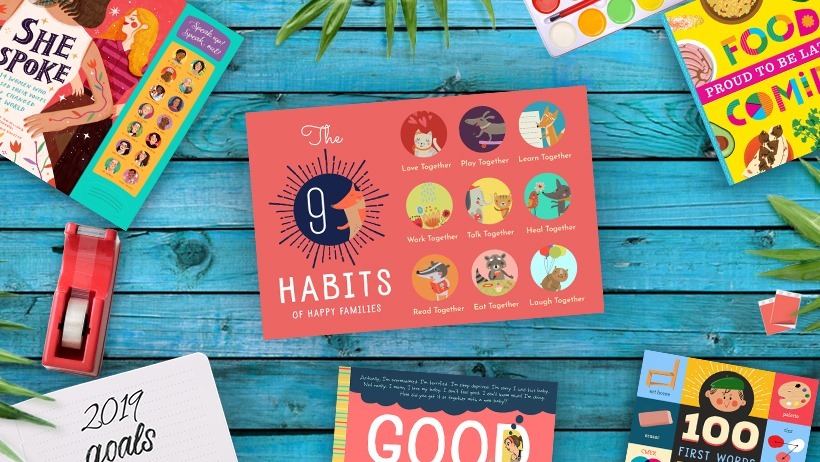
With help from guest authors, experts, and community and business leaders, the Familius Helping Families Be Happy podcast explores topics and issues that connect families to the nine habits of a happy family: love, play, learn, work, talk, heal, read, eat, and laugh together.
Episodes
Wednesday Nov 09, 2022
Wednesday Nov 09, 2022
In today’s episode of the “Helping Families Be Happy” podcast, host Christopher Robbins, Co-founder of Familius Publishing (A Husband, Father, Author, Fisherman, Backpacker, and Aspirational Musician based in the Central Valley of California) talks with guest Dr. Ben Bernstein (A veteran Psychologist, Educator, Keynote Speaker, Author, and a Performance Coach for Academy Award, Tony Award and Pulitzer Prize winners. His client lists include CEOs, Dentists, Athletes, Attorneys, Physicians, Business Executives, Opera Singers, and Actors). You can reach Dr. Bernstein at his website -- https://www.drbyourbest.com/. Today Dr. Bernstein talks about the ways to improve our mental health.
Episode Highlights
- 01:40 – Dr. Bernstein is the Founder and Artistic Director of the ‘Singer’s Gym’, a nonprofit training workshop for professional singers that have vitality, spontaneity, and connection in their work.
- 04:00 - Dr. Bernstein says that he is deeply a person of prayer and a man of religious practice, but you don't have to have a religion to have a spirit, because everyone has a spirit.
- 05:40 - There's a reason that all the sages and saints for 1000s of years have been talking about the breath because it's a real vital connection from vitality.
- 08:00 - A very healthy thing to do for your mental health is to appreciate somebody in your life daily. Appreciating means expressing gratitude to someone in your life and then expressing gratitude to them.
- 10:00 - Dr. Ben heard a philosopher on the radio say once, “We're built to be givers, not takers”.
- 12:00 - You wouldn't even be here today if it was purely negative. There always is a positive side, we were not created thinking we are a loser.
- 14:00 – Christopher summarizes what all Dr. Bernstein spoke about during the episode.
- 16:25 - Dr. Ben says that we do have different kinds of mental conditions that are diagnosable, however, in his practice, and in his life he has dealt with so many of these, even in the most difficult circumstances through love.
Three Key Points
- Mental health is one part of our overall health, however, Dr. Bernstein uses three-legged stool which is body, mind, and spirit. When we talk about mental health, we seem to be focusing only on the mind but we are also a body and a spirit. When all three legs are equally strong, our mental health becomes equally strong too. Mental health also depends upon our physical, and spiritual health. Dr. Bernstein says that wherever we construe spirit, he views it as a motivating force. So, Dr. Ben speaks a little bit about the health of each of the three facts. The most important is to help your mind through your body is to get connected through your body to the world.
- Dr. Bernstein mentions that he has a radical view about the definition of mental health which is that mental disturbance unless it's a genetic or a brain disorder, it's always a disturbance of some kind of love. We're meant as human beings to give to each other to prove our love to give. When we pull away from that, we're often in a state of fear or anger. As a result, we cut ourselves off from the connection that we all have and we all need from each other.
- It's all about positive connection, the more connected your body is, and the more connected you are to others, to nature, or the more you appreciate people, the more mental health you will have.
Tweetable Quotes
- “The thing you missed is that 3 of those books were published by Familius.” - Dr. Ben Bernstein
- “October is a Mental Health Awareness Month.” - Christopher Robbins
- “When you hold your breath, the message that your brain is getting is that you're dying.” - Dr. Ben Bernstein
- “Ground yourself right now, grounding means feeling the chair support, you feeling the floor support, we really get out of touch.” - Dr. Ben Bernstein
- “The spirit connection in the spirit has two parts to it.” - Dr. Ben Bernstein
- “Appreciation we know from lots of research has a lot to do with mental health, so that's one thing I would recommend.” - Dr. Ben Bernstein
- “Looking at your thoughts about yourself is really super important.” - Dr. Ben Bernstein
- “I think we're all here to serve one another.” - Dr. Ben Bernstein
Resources Mentioned
- Helping Families be Happy Podcast Apple
Wednesday Oct 26, 2022
Wednesday Oct 26, 2022
On today’s episode of the “Helping Families Be Happy” podcast, host Dr. Carla Marie Manley, talks with Lindsey McDivitt about her enchanting and fabulous new book – “Christmas Fairies for Ouma”. This book shares Christmas joy and celebrates the love between a grandparent and a grandchild.
Episode Highlights
- 01:35 – Lindsey says that this is her first fiction book however previously she was a healthcare professional where she worked with stroke survivors and their families to provide education and support.
- 03:45 – “Christmas Fairies for Ouma” is all about loving, kindness, connection, long distance, and the importance of really embracing our loved ones.
- 06:00 - For Lindsey, spending Christmases far away from loved ones resonates so much with her that in this holiday season it is time to reach out as real letters are so precious.
- 10:30 – Lindsey recalls how they used to celebrate Christmas in South Africa stating they used to sit around the Christmas holiday dinner table while two people used to pull on the paper crackers. Then she also reminisces how everybody had to wear those paper crowns at the table and they all looked ridiculous.
- 11:30 – Dr. Carla asks Lindsey about what they ate on Christmas day in South Africa.
- 15:34 – “You’re making me think of another way to communicate with grandparents is the old thing of sending thank you cards right after Christmas.”, says Dr. Carla.
- 17:00 – Dr. Carla tells Lindsey to give the listeners an idea of other than the back matter what is inside of “Christmas Fairies for Ouma” looks like.
- 18:25 - The grandmother in this story has a personality, mainly through the art illustrations.
- 20:30 – Lindsey says that we should, especially at Christmas time not just be talking about the message of kindness but sitting together the adult and a child, and reading a picture book is such a loving engrossing activity on its own.
- 21:00 - This book more than qualifies as a most precious book for parents, aunts, uncles, grandmas, and grandpas.
- 22:00 – Dr. Carla says, talking about the power storybooks definitely when you have someone in your life who has suffered from a stroke just sitting down and reading with them, or receiving a card in the mail, makes all the difference in stroke recovery.
- 23:44 – Dr. Carla states that she was listening to a podcast the other day where the millennial generation is already feeling the pressure of aging and they're all 30 years old.
Three Key Points
- Lindsey says that nowadays long-distance grandparents have a lot more tools like video and telephone calls but they never had any of that. They just had letters and occasional visits so that bond is so strong. The target audience for this book is around ages four to eight. Lindsey thinks it will reach a broader audience because she knows that many of her friends are new grandparents and they're all very taken with the story whether they live close to their grandchildren or live far away. During Christmas, this message of kindness, reaching out, and connecting with loved ones is important.
- One part of this book that most people don't realize is there's also a learning aspect apart from learning the power of kindness. The book is based partially in South Africa where Lindsey’s grandparents were and some talks a little bit about South Africa and the way Christmas is celebrated there. Since South Africa is in the southern hemisphere, so it's Christmas in the middle of summer. it's quite different from where she spent most of her growing-up years and snowy Minnesota. So the book just juxtaposes those two parts of the world and those two seasons.
- Although this is a picture book for a very young age, it gives a little bit of information about how South Africa has changed and transitioned from a very racist apartheid society where the racists were kept separate by the white government, and how that changed after President Nelson Mandela became the first democratically elected president by all races back in 1994.
Tweetable Quotes
- “I was in healthcare for a long time but started writing children's books about 10 years ago.” - Lindsey McDivitt
- “So many people could benefit from more support around stroke because it is a life-changing situation.” - Dr. Carla Marie Manley
- “Even though I only saw my grandparents about every three years, I remain close to them, thanks to letters.” - Lindsey McDivitt
- “I don't know if it's the same in your area but our blue mailboxes in Sonoma County have all but disappeared, they've taken them off of streets, corners, downtown, and sidewalks.” - Dr. Carla Marie Manley
- “I'm going to share some information about South African celebrations.” - Lindsey McDivitt
- “Even though it's middle of summer, at least my family would still have a hot meal like roast beef, potatoes, and big Christmas pudding like the steamed pudding.” - Lindsey McDivitt
- “Whether or not we received a gift from somebody what a perfect opportunity to send a card, especially a handmade one that says thanks for being in my life.” - Dr. Carla Marie Manley
- “To see the title of Christmas fairies for Omen comes from the actual card has fairies on it, and it goes all the way across the world.” - Lindsey McDivitt
- “It hardly matters what the book is exactly, but I know that as adults at Christmas time, we want to read cozy Christmas tales.” - Lindsey McDivitt
Resources Mentioned
- Helping Families be Happy Podcast Apple
- Lindsey McDivitt: Website Instagram Twitter
- Podcast Editing
Wednesday Oct 19, 2022
Wednesday Oct 19, 2022
In today’s episode of the “Helping Families Be Happy” podcast, host Dr. Carla Marie Manly, a practicing Clinical Psychologist, Wellness Advocate, and Author based in Sonoma County, California talks with guest Matthew Winner, a Head Podcaster for A Kids Book Company where he leads the company in creating a podcast network dedicated to helping kids. They talk about his journey as a kid and what it takes in the circumstance to repair the harm that was caused to him
Episode Highlights
- 01:40 – Matthew says he is a great fan of Cognitive Behavioral Therapy - CBT and loves that he can reflect and see where he was in his childhood and applies it to where he is now.
- 04:00 – Dr. Carla says that they are not blaming or shaming anyone, they are simply saying, there are things that you can do in your life to ensure yourself or your family are happier.
- 05:15 - The breakthrough for Matthew was a book that his therapist introduced to called Hold Me Tight by Dr. Sue Johnson.
- 07:00 - The beauty of attachment is that we can create secure attachment. We can create it no matter how old we are.
- 10:40 – Matthew mentions that wherever we are, in our life journey, it's liberating to say that the class was doing the best they could, just that they didn't know better.
- 12:40 – Dr. Carla asks Matthew to explain ‘Restorative Justice’ to the listeners.
- 15:20 - Restorative Justice work is to repair the harm so that we can look at the action that happened and say that it was wrong, but the individual is not a good or bad person. They are a person who committed this action while being aware of it.
- 17:10 – Dr. Carla tells Matthew that he mirrors what he said, he looks at the harm done, no blame, no shame but he addresses the person injured so that they can come from a place of empowerment and cure for the long-term.
- 19:20 – Matthew thinks that there's a lot of value there to healing together for them to say, that both the persons that were harmed and the person that is responsible for the harm can both be hurting and both need to heal.
- 21:24 - When Matthew takes that thing that he practices with Dr. Cara and applies it to talk to his parents or wife or kids or colleagues. He can start breaking down the fear or resistance around them because he has already got a notch on his belt from doing it in therapy.
- 22:39 - If we're practicing healthy loving skills in a safe family, then we can go out and practice them, at school, in friendships, or at work too.
- 25:30 – Matthew thinks that the reason why he has been working with children for so long is that it is incredibly humbling where he just learns and learns. They are exceptional at exposing his insecurities.
- 27:40 - A way we protect ourselves is by pushing others away, fighting, and by trying to make sure that no one causes us further harm.
- 29:40 – Matthew reveals that their kids’ podcasts have a podcast on emotions in coalition with young children and their grownups in part about destigmatizing therapy but also about allowing ourselves to feel big emotions.
- 31:00 - The work that they do in their Kids Co. is they say kids are ready and they make things for kids to talk about, says Matthew.
- 32:00 – Matthew mentions that the fact that he can see adults trying to protect him in his life, is what draws him to different hosts about the different podcasts that we have.
- 34:10 – Matthew suggests empowering children by giving them the language that they understand. If this is the word for that thing, then explain it to them, but don't call it something else. That is a piece of currency that they'll use to navigate the world, so deny them that tool.
- 35:55 – Dr. Carla does love all of the principles that Matthew has been bringing about on how to empower children and see them as unique individuals who are innately wise.
- 36:50 – Matthew says all the adults that maybe weren't there for him, how would they have ever known that 30 years later he would be an adult that could be here for him?
- 38:30 – Matthew wants to make sure that we all agree to learn together and to take on that position of learner.
Three Key Points
- Matthew says that this indigenous practice of repairing harm, where harm was caused not seeking to punish but seeking to acknowledge that we are part of a community and as a community, we all need to be able to move forward together so being able to ask what it takes in this circumstance to repair the harm that was caused for Matthew. Between that repairing harm and working hard to see the best in people, to be able to love his parents and say, they were doing the best. They could and love them in a different way now and say he needs them to continue to do the best that they can and Matthew also will try to do the best that he can.
- In the classroom community, they all become much more self-aware, as well as class aware that they are an ecosystem that they are all feeding off one another. Similarly, in the justice system, all of us in this community/society are just part of a fishbowl we're all part of a singular ecosystem that affects everything. We must recognize that we siblings can heal each other and also that it can go upward that my kids can heal me, making sure that I am communicating with them.
- Dr. Carla says that when we look at Maslow's hierarchy of needs, first and foremost comes Safety. We want to be safe, and we want to be loved because we are truly and deeply loved in the most beautiful sense of the word. We know we are safe because someone who truly loves us might make mistakes, but they won't purposefully harm us.
- Let's talk about sexual abuse from the age of five because around two to five children by the age of 5 or 10 will have an experience with it and the number is huge. So instead, why wouldn’t we talk about this? Matthew states that he was a victim of sexual abuse, and it took him up to the age of 36 to be able to through therapy and notify authorities. It was past time, there was nothing that the state of Pennsylvania could do at that point.
Tweetable Quotes
- “I think that I've really pushed up against this notion that our parents did the best they could.” - Matthew Winner
- “We didn't have parents who knew anything about attachment. They didn't know how to create secure attachment.” - Dr. Carla Marie Manly
- “I'm not judging any of the pupil’s choices, it's just realizing that sometimes in life we don't do our best.” - Dr. Carla Marie Manly
- “You can't change other people; you can only change yourself.” - Matthew Winner
- “You said one of my favorite words Fishbowl and another favorite, which is Ecosystem, right?” - Dr. Carla Marie Manly
- “Children are exceptional in exposing our shortcomings, and our sensitivities.” - Dr. Carla Marie Manly
- “We have a kids’ podcast about current events and about big topics like school shootings and racism and things like that and all of it.” - Matthew Winner
- “I have come to understand that there's no way in my childhood that I wasn't communicating to my parents my needs.” - Matthew Winner
- “Don't talk down to your children, talk up to your children. It is such a beautiful statement.” - Dr. Carla Marie Manly
Wednesday Oct 12, 2022
Wednesday Oct 12, 2022
In today’s episode of the “Helping Families Be Happy” podcast, host Christopher Robbins,
Co-founder of Familius publishing, husband, father of nine, author, fisherman, backpacker, and aspirational musician based in the Central Valley of California talks with guest Ashley Marie Mireles, the Director of Sales and Marketing at Familius Publishing, working to help families be happy through the books she writes, and sells. They are discussing Hispanic Heritage Month.
Episode Highlights
- 01:56 – Christopher enquires about Hispanic Heritage Month and why it exists.
- 03:32 – Ashley says, it is called Hispanic Heritage Month, but it is 30 days from September 15 to October 15.
- 05:56 – The goal is to make the language more inclusive. So, in these spaces, they will use an ‘e’ instead of an ‘o’ or an ‘a’ when they want to be more inclusive, says Ashley.
- 07:41 – Ashley gives a couple of examples of those of Hispanic descent who have contributed to the nation.
- 09:10 – With this theme, they are aiming to be focused on the people who have made a difference in the US community and are going to make a difference in the future from Hispanic backgrounds, mentions Ashley.
- 11:22 - If you are somebody who is a part of the Hispanic Heritage just learn about your own family or your ancestors, states Ashley.
- 13:30 – Ashley mentions her book “Proud to be Latino”.
- 15:03 - Appropriation happens when one is characterizing a culture or using things that are sacred to the culture as an aesthetic rather than appreciating it for what it is, says Ashley.
- 16:50 – Ashley recommends some Familius titles that can help us celebrate Hispanic Heritage Month.
Three Key Points
- Ashely shares that Hispanic Heritage Month is started as a national week observance. So, it was then Hispanic Heritage Week, which was started by Lyndon B. Johnson in 1968. There was a lot of talk in Congress about making this a month-long celebration, and it was officially turned into a month-long celebration in 1988 under the Reagan administration. It goes from September 15 to October 15, it is originally with a weekly observance that started on the 15th which is national Independence Day to a lot of Latin American countries. The goal was to celebrate the Hispanic Heritage in the US and all the contributions that people from Hispanic culture have made to our country. So, now it is a month-long celebration and they pick a theme every year, there are a lot of different celebrations that the national government will put together as well as other organizations.
- Ashely says, this year's theme is Unidos: Inclusivity for a Stronger Nation. The theme this year also aims to teach people how to be more inclusive with each other, not just within the community, but also outside of it. It focuses on the melting pot aspect of the United States and shows how people of Hispanic Descent have made important contributions to the US.
- Ashley highlights that the biggest thing to remember when you are celebrating Hispanic Heritage Month or any of these Heritage-themed months is to do your research to find out the history and the intention behind it and ensure that you are celebrating not appropriating.
Tweetable Quotes
- “It's called Hispanic Heritage Month because they are focused on celebrating folks from Spanish-speaking Heritage.” - Ashley Marie Mireles
- “If you're not somebody who is of Hispanic Heritage, learn about it.” - Ashley Marie Mireles
- “If you're not of Hispanic descent, it's easy to assume that somebody of Hispanic culture is going to be exactly like somebody else.” - Ashley Marie Mireles
- “It's important for people to remember and not just kind of paint everyone with the same brush.” - Ashley Marie Mireles
- “Appreciation goes into knowing what you're truly celebrating.” - Ashley Marie Mireles
- “Remember that there's somebody from Cuba is going to have a very different culture and practices than somebody who is from Mexico.” - Ashley Marie Mireles
Resources Mentioned
- Helping Families be Happy Podcast Apple
- Ashley Marie Mireles: Instagram LinkedIn
- FamilySearch.org
- Podcast Editing
Wednesday Oct 05, 2022
Wednesday Oct 05, 2022
In today’s episode of the “Helping Families Be Happy” podcast, host Dr. Carla Marie Manly, a practicing Clinical Psychologist, Wellness Advocate, and Author based in Sonoma County, California talks with Author Linda Cutting who talks about Adoption and her book – ‘A is for Always’.
Episode Highlights
- 01:21 – Linda was professionally a Concert Pianist for many years and wrote a memoir in 1997, which was published by HarperCollins.
- 03:10 – Dr. Carla asks that in terms of adoption and how it impacted Linda and her children's lives, what are some of the biggest gifts for her and her children?
- 05:40 – Linda says that she tried to address some of the harder and more challenging aspects of adoption in this book – ‘A is for Adoption’.
- 07:05 - There are many issues with exploring adoption, it's been a wonderful way for Linda to have her family, especially after she had two pregnancies and miscarried. She then adopted as she knew kids in the world needed families.
- 09:30 - Whether it's an adoptive family or, a DNA family, nobody wants to be left out. We all want to feel safe, loved, and secure.
- 11:40 - One of the things that I was very serious about addressing was the difficulties that each of my kids had about adoption in school.
- 13:20 – Linda mentions that America has one of the most mixed race, mixed ethnic groups, cultures, and populations of any country on Earth which gives the message of inclusiveness.
- 16:00 - Linda refers to one of the scenes from a Chinese film where the father explains to her adopted daughter through a metaphor of a tree that has two families and they're both very important families and both are real.
- 17:50 - The other important aspect of adoption Linda thinks is to talk to your kids about and it can be painful but they need to hear it from you is the identical letter K.
- 21:10 - Fortunately, we now live in a world where we are far more inclusive and we are far more willing to talk about things that we didn't talk about 20 years ago.
- 22:10 – Linda tells where listeners can reach her, they can find the book on the Familius Publishing Website or the Workman Website or Amazon, and your local independent bookstores.
Key Points
- Linda says she is very grateful to her children’s birth parents because they gave them life but she thinks the truth is that every adoption begins with loss. So eventually she realized that the bringing up of birth parents brought up the loss, and that's probably why they didn't want to hear it quite as much because they don't want to be reminded of that. Linda thinks one of the reasons she has brought this topic up so much is because one of the problems with adoption has been the secrecy around it and a sense of shame. She didn't want that to be part of her kids’ story or their lives. So in this book – ‘A is for Always’, Linda is trying to promote openness and conversations with adoptive parents and their kids.
- Dr. Carla says that the reason you need to pick up this book is that the illustrations are so beautiful, as well as the energy of the text, which is very loving and welcoming. Whether you're reading it to a newborn, an infant, a five-year-old, to a 10-year-old it would really carry a lot of love and meaning.
Tweetable Quotes
- “We adopted him as a newborn in the States and our daughter's 17 and we adopted her as a one-year-old in China.” - Linda Cutting
- “I didn't want my kids to feel ashamed about questions they might have. So, Q was for questions you may want to shout.” - Linda Cutting
- “Transparency and curiosity, those sound like very good places to be in any parenting but particularly in adoptive parenting.” - Dr. Carla Marie Manly
- “My daughter really wants animal illustrations so any child can relate.” - Linda Cutting
- “Makes sense that your book is doing so well because ‘A is for Always’ will resonate with the family that wants to really say we are inclusive.” - Dr. Carla Marie Manly
- “Inclusivity is so important in an overall way not just for adoptive families, but for all of us. Invite and include others in our lives.” - Linda Cutting
- “It is about connection and it's about growing together.” - Dr. Carla Marie Manly
Resources Mentioned
Wednesday Sep 28, 2022
Wednesday Sep 28, 2022
In today’s episode of the “Helping Families Be Happy” podcast, host Christopher Robins, Co-founder of Familius Publishing (A Husband, Father, Author, Fisherman, Backpacker, and Aspirational Musician based in the Central Valley of California) talks with guest John Schlimm, Harvard Trained Educator, Artist, Advocates, International Award-Winning Author about what would Gen Z do, and what we can learn from this magnificent and inspiring Generation?
Episode Highlights
- 01:17 – Christopher introduces John and shares about his work toward Gen Z. John is an author of Children's Picture Book (The Star jumped over the moon) and the upcoming (What Would Gen Z Do?)
- 03:00 – Christopher enquires from John about who is it that defines or decides that certain years become a certain type of generation, and what that even means.
- 05:05 – John discusses the stereotypes about Gen Z.
- 07:22 – John reveals that what he has learned from Gen Z is to always be the first one to initiate conversation. Oftentimes we as Non-Gen Z adults have to take that first step and ask the first question, initiate that conversation.
- 09:40 – John recognizes how open and courageous Gen Z was, unlike any other generation to be sharing their mental health challenges and struggles.
- 11:50 – Although Gen Zs are open and courageous and tell us anything we want to know about their mental health or their thoughts on it. But as a generation, they do have the highest suicide rate in history, states John.
- 13:09 - There's a lot more learning and understanding that we need to address, states Christopher.
- 15:10 – John shares that Gen Z has taught him about gaming and gamers, this stereotype that they have had since the PacMan days of the lazy kid sitting in a dark basement maybe someone even in their 20s and 30s sitting in mom and dad's basement just playing video games all day letting their brain and life waste away is not accurate.
- 17:18 – Christopher says, there's so much to embrace about new generations and their innovation.
- 19:17 – John has started encouraging Gen Zs to put a section on their resumes, if they're active gamers, especially if they are in competition and are winning competitions.
- 21: 40 – John encourages Non-Gen Z adults to ask Gen Zs about their tattoos.
- 23:00 – What needs to happen with education, discusses John.
- 27:10 - If we don't deliver then as educators, Gen Zers are already turning to YouTube and other sources to teach themselves, mentions John.
- 29:00 – One of the funniest parts about Gen Z and certainly something unexpected was when they started telling him how much they love the 1980s culture of movies, music, fashion, etc.
- 30:28 - It is nice of a stereotype as it is because they're looking at us through the lens of the music, movies, big hair, fashion, and the neon, says John.
- 33:49 – Christopher asks John that every chapter in his book ends with two questions, one for the reader to ask themselves and one for the reader to ask Gen Zers. He asks, why it was important to him to do that for every chapter.
- 35:15 - This book in many ways is for parents, teachers, employers, and people who are working with this wonderful generation on an everyday basis, says Christopher.
- 37:00 – John gives an example of an activity that is helpful for us to engage in with Gen Z and Y.
Three Key Points
- John says his number one piece of advice when it comes to Gen Z is if we want to know something, just ask them. One of the ad-raps that Gen Z give is that they seem so quiet and introspect or introverted and that's when they come off as being maybe a little bit aloof or rude in social settings. So, what he has learned after talking to 1000s of Gen Zers now across the country is that it's not that they don't have anything to say, but again, and again, they tell him that many of them have social anxiety.
- John says - the more skill-based we can make every facet of education, it’s better. Especially for Gen Z as they want to learn skills. So, the traditional model of lecture, homework, test, and repeat, just doesn't cut it for them anymore. That's not to say that we have to do away with that model completely. There is still a place where lecturers are needed. Homework for sure is needed but if we as academic culture, and academic society, those of us who are in the academic world can take a look at every class we teach, and transition as much of it as possible to be in a skill-based model that's going to better serve our students and give them what they need.
- John explains the reason for having two questions in every chapter of his book. He wanted this to be interactive on different levels, not only as a way for the reader to get to know Gen Zers better, but he also in that process wanted the reader to get to know themselves a little better and to check in with themselves and ask themselves the questions about how do I perceive my mental health? So, it became a great opportunity with those two questions at the end of each chapter for the reader to check in with themselves about the topic at hand, but also then to ask Gen Zers because again, he’s all about facilitating better communication between Gen Zers, and the rest of the world. So, he thought that those two questions allowed that to happen and gave some guidance and even sort of permission to the reader to engage in a better line of communication with themselves and with Gen Z.
Tweetable Quotes
- “The age range of Gen Z years is 10 to 25.” – John Schlimm
- “Mental health part of Gen Z is what initially drew me to these young people.” - John Schlimm
- “They've pulled me more into the realm of mental health advocacy.” - John Schlimm
- “I went to the source rather than trying to make up answers in my head or rely on stereotypes.” - John Schlimm
- “But for Generation Z, first of all, gaming has become a bona fide sport.” - John Schlimm
- “The US military are now actively recruiting gamers to come work for them.” - John Schlimm
- “One of the things I learned early on from Gen Z as well as they are taking the art of the attack to a whole new level of sentiment and storytelling.” - John Schlimm
- “As an artist and a storyteller, I'm fascinated by tattoos.” - John Schlimm
- “It's all about at the end of the day having fun and connection.” - John Schlimm
Resources Mentioned
- Helping Families be Happy Podcast Apple
- John Schlimm: Website
- Podcast Editing
Wednesday Sep 21, 2022
Wednesday Sep 21, 2022
In today’s episode of the “Helping Families Be Happy” podcast, host Dr. Carla Marie Manly, a practicing Clinical Psychologist, Wellness Advocate, and Author based in Sonoma County, California talks with guest Apurva Shrivasta about her life as a Book Reviewer.
Episode Highlights
- 01:38 – Apurva is a UX Designer by profession, and works for a Credit Card Company. Other than that, she’s also a book reviewer on Instagram.
- 03:13 – Apurva’s professional work is very similar to what one does in their day-to-day life and in motherhood.
- 05:09 – Just being their (Children) biggest cheerleaders is all about parenting and all these intricacies of reaching the child, states Apurva.
- 07:17 – Apurva’s children believe in the power of reading, and she’s so fascinated to see this valuable trait naturally emerge in her family, highlights Apurva.
- 09:23 – Dr. Carla about Apurva, no matter the child's age when she's reading with them, she has created sort of a bubble or cocoon in her own world where the two of them are exploring whatever's in the book together. She’s on an adventure in her own world.
- 11:10 - It does take a lot, not just cognitive energy but also emotional energy to tune into a child that way, says Dr. Carla.
- 13:25 – Dr. Carla enquires about how can toddlers learn problem-solving.
- 14:38 - It's very important to see how our kids react to certain things, and how do they carry themselves with confidence because that's important, says Apurva.
- 16:49 – Apurva highlights that just being in that moment present with them and not thinking about anything else and giving that undivided attention is important.
- 18:10 - Just being there with the kids is the most important thing without the intervention of technology, says Apurva.
- 20:34 - Kids have a brain where they can wander. So, why not be a model for them to display what the world is like and how it is so beautiful, states Apurva.
- 22:00 – Apurva shares her opinion on which book is better in certain age ranges.
- 23:20 – Apurva wrote a book which is, about how does a child’s brain works?
- 25:00 – They do like a lot of Montessori education for both her daughters.
Three Key Points
- Apurva highlights - reading in itself creates that bonding and it's really important. We can really like read aloud or let them (Children) read on their own if they are a little elder, but when we're reading with them, we're creating our own world. It's significantly benefitted our child's brain and ours as well and we can see that wire but then it goes from our child to our brain and then naturally it prepares them for their academic success.
- Apurva says - reading is one way where we express our affection and gratitude. We're given the opportunity that we can read it to them. It's like we should be really grateful for that and keep developing that habit little by little, even if it is like five minutes, 10 minutes. She thinks it's more than enough and when we see that smile on their face when we're together and not busy in our phones or doing other things and ignoring them, it's blissful.
- Apurva shares what makes a really great children's book - first the story the characters that we bring in, what is the story depicting and also the ups and down. There's not a story that wouldn't have a down and then how do they shine up and brings out the moral out of that. So, all those milestones are really important in a story.
Tweetable Quotes
- “Being the child's advocate or cheerleader, is really important.” – Dr. Carla Marie Manly
- “The more books, the better it is.” – Apurva Shrivasta
- “You are creating your own world when you're reading with a child.” - Apurva Shrivasta
- “You can get creative with reading.” - Apurva Shrivasta
- “It is joyful, but sometimes it is tiring.” - Apurva Shrivasta
- “5 to 10 minutes of reading can make a difference in a child's life.” - Apurva Shrivasta
- “Integrate practical life along with that. I think that's really important.” - Apurva Shrivasta
- “Empathy and compassion are a theme that we really put more emphasis on.” - Apurva Shrivasta
- “We also encourage a lot of unstructured day time too.” - Apurva Shrivasta
- “That bond between your children and yourself, you wouldn't even know how far along that can go.” - Apurva Shrivasta
- “A child who grows up with tuned parents, generally have really good self-confidence, high self-esteem.” - Dr. Carla Marie Manly
- “Just imagine, there is no fear in imagining things.” - Apurva Shrivasta
- “What a strong power to have the gift of imagination and to pass that on to your children.” - Dr. Carla Marie Manly
Resources Mentioned
- Helping Families be Happy Podcast Apple
- Dr. Carla Marie Manly Website LinkedIn Twitter Instagram
- Podcast Editing
Wednesday Sep 14, 2022
Wednesday Sep 14, 2022
In today’s episode of the “Helping Families Be Happy” podcast, host Christopher Robins, Co-founder of Familius Publishing (A Husband, Father, Author, Fisherman, Backpacker, and Aspirational Musician based in the Central Valley of California) talks with guest Denise Marek (An internationally known Worry Management Expert and the creator of the CALM Methodology for worry-free-living. Besides, she is a Lecturer, Consultant, Writer, and Author of several books including CALM which is coming out on November 2022). Today Denise is talking about how to help mothers be calmer using the four-step process.
Episode Highlights
- 01:40 – Denise has been awarded the Toastmasters International Accredited Speaker award for professionalism, outstanding achievement, and public speaking. She was the first woman in Ontario to ever receive this honor.
- 04:00 - When you learn how to stop worrying, it's going to allow your parenting experience to be more present happier, and less stressed.
- 05:50 - If you're looking deeper into the CALM, the C stands for Challenging your assumptions, because most of the time we're worrying, or assuming that something we don't want to happen might happen, says Denise.
- 08:00 – Denise states there's nothing wrong with making assumptions, however, the trouble is when you make negative assumptions, that's when you can start worrying.
- 10:00 – The second step is to ask yourself, will it matter a year from now? Most of the things we spend our time worrying about are really insignificant in the grand scheme of things.
- 12:00 - A lot of worries are when you're thinking, and there's something very important to do. Take action to control the things that you can control and one of the things you can control is self-care strategies.
- 14:00 – Denise talks about mastering your mind by catching and correcting throwaway words.
- 16:10 - Sometimes you have to acknowledge that you are exhausted and there is a time and place to talk.
- 19:20 - It's important to let go of the things that you can't control. We can learn to control our responses to the things that are happening.
- 21:25 – You should not feel guilty if you're not doing your best, if you are not doing things appropriately, and are not productive.
- 23:30 – Denise mentions that when you're feeling worried, it takes away some of your enjoyment. So, do what you can to learn how to stop worrying now and if you feel like you can't do it for you and do it for your kids.
Three Key Points
- It is important to learn how to stop worrying, because it's going to allow your parenting experience to be more pleasant, happier and less stressed. It is inappropriate if we're worried and thinking about things that could go wrong in the future. Once you have the tools to stop worrying, then you can share that poem with your children so that then when they grow up, they're will too learn to worry less and then it will pass it down for a generation. So, it really is a generational blessing to learn how to stop worrying as a mom.
- Most of the time when we're worrying, we're putting ourselves in the future, all of the things that could go wrong, but in the present, everything's okay. So, in the present, remind yourself that all is well right now. That's just the way our bodies work, if you were actually in danger, your body sets you into motion, your brain will just jump to take you into action. When you're just imagining remind yourself, I'm safe right now.
- We need to be on the lookout on the things that we automatically say to ourselves like, I can't do it or this isn't going right, etc. We need to pay attention to the words that we're speaking out because our minds will believe on these more. The things that we hear ourselves say, then the things we hear anyone else saying.
Tweetable Quotes
- “It's called CALM, and it's an Acronym, help us to understand what it means.” - Christopher Robins
- “There are some steps that you need to take to protect yourself, protect your family to protect your wealth, and that sort of thing.” - Denise Marek
- “Let's talk about the first one that I even mentioned in terms of all of those wave questions.” - Christopher Robins
- “When your environment is messy, or when your environment is unorganized, your brain sometimes can feel unorganized too.” - Denise Marek
- “I'm just talking about being careful that that becomes a habit.” - Denise Marek
- “My dad used to say do your best and forget the rest.” - Denise Marek
- “I have nine children and I can tell you that they've all come prepackaged, and we've done our best to teach and train them.” - Christopher Robins
- “Denise's book CALM for Moms comes out in November 2022, and visit her blog at www.denisemarec.com.” - Christopher Robins
Resources Mentioned
- Helping Families be Happy Podcast Apple
- Denise Marek Instagram Facebook YouTube
- Podcast Editing
Wednesday Sep 07, 2022
Wednesday Sep 07, 2022
In today’s episode of the “Helping Families Be Happy” podcast, host Dr. Carla Marie Manly, a practicing Clinical Psychologist, Wellness Advocate, and Author based in Sonoma County, California talks with Ali Jensen (Founder/Author and a military spouse and mom of three kids) about her very busy career, motherhood, and her two books one of which is ‘Perfect for This Skin You're In’.
Episode Highlights
- 02:10 – Ali says that she grew up in the corporate world and worked in human capital consulting for a long time. She is very passionate about well-being.
- 03:45 – Ali loves military life for so many reasons, as per her it’s an amazing community.
- 06:10 – Ali and her son spend a lot of the time together but as an author, she feels the book world has been interesting in terms of growing together, reading together, and talking together.
- 08:25 – Dr. Carla asks about Ali’s secret to creating a happy, and healthy family as well as her recommendations as a mom of three little ones and husband in the Air Force.
- 10:45 – Dr. Carla refers to what Ali said about emotional intelligence, modeling healthy emotions, and letting your kids see that it's okay to cry, and it's okay to have conflicting emotions.
- 12:45 - You become proud of yourself for trying something new, and if it doesn't work, that's fine.
- 14:45 – Ali says that when they wake up they have cheesy eggs, avocado, and toast in the morning.
- 16:50 – Dr. Carla asks Ali to share one of her secrets to motherhood and life success.
- 19:00 – They talk about Ali’s new book – ‘Perfect for This Skin You're In’’. Dr. Carla says she likes the title of the book so much.
- 21:00 - We all have gifts within, so be yourself and let yourself shine but also be accepting and we're only better together.
- 24:40 – Ali says that she is glad that she keeps it alive because if she asked her husband questions then he finally says, please, no more questions.
- 26:30 - If we bring it down to that one baby step at a time, one piece at a time, it's easy to forget.
Three Key Points
- Ali says that even if it's 30 minutes of getting outside in nature that helps them be happy and she thinks if she is happier it kind of sets the tone. So they try every day to get outside and make sure they're playing using creativity exercises. They definitely love sweets too but Ali’s daughter eats a ton of sweets and then she doesn’t feel good. So Ali thinks their main secret is their growth mindset and it is really tough. Also, they move so often, while they were moving in their last assignment in Colorado her daughters saw Ali crying and felt really sad. Ali thinks just being like a human and letting them know that you have all the emotions too. Ali is like you can be sad and cry and also be very excited for the next adventure and moving to a new country and exploring.
- We are in a world where we think that fear and anxiety are always bad when in fact sometimes having just the right amount of fear, and anxiety reflects that there's a close opportunity ahead. This is just a sign that we're growing and we're able to expand because we do get a little too comfortable in life where we're not expanding anymore.
- Dr. Carla thinks that curiosity is stout in many ways to judgments when we open up and we become curious and ask questions somehow and also her line of work. She doesn’t want to be a judgmental psychotherapist or author. When we open up and start asking questions and stay in that place of objectivity and beautiful childlike curiosity, we find so much on the other side. We find that we can act in a really vulnerable way in true ways.
Tweetable Quotes
- “I just love you talk about what makes you happy as a family.” – Ali Jensen
- “I have been either on the floor for meals or air mattresses, so that can be tough.” - Ali Jensen
- “My first book ‘Anything I Dream’ was inspired by my first daughter.” - Ali Jensen
- “Absolutely what a role model you are, not only do you have the flexibility and being able to adapt to your ever-changing world, but also creativity is clear that you're radiating light for them to see creativity and action.” - Dr. Carla Marie Manly
- “I appreciate everything that you said and shared right there.” - Dr. Carla Marie Manly
- “I think COVID made a lot of people reflect on you know, what do I want to do?” - Ali Jensen
- “We all mess up, we're human, but like what can I learn from it and how can I do better next time?” - Ali Jensen
- “It sounds as if you take your role as mom very seriously in a fun way.” - Dr. Carla Marie Manly
- “Please tell about the genesis of the book and how it can be used to make women and moms and people, in general, feel good about who they are.” - Dr. Carla Marie Manly
- “It sounds like a really exquisite book and I really appreciate what you were just saying about listening.” - Dr. Carla Marie Manly
- “I think if you just focus on one thing.” - Ali Jensen
Resources Mentioned
Wednesday Aug 31, 2022
Wednesday Aug 31, 2022
In today’s episode of the “Helping Families Be Happy” podcast, host Dr. Carla Marie Manly, a practicing Clinical Psychologist, Wellness Advocate, and Author based in Sonoma County, California talks with guests Ale and Coco. They talk about how they use Instagram and the world of social media to help empower children, families, women, and everybody.
Episode Highlights
- 01:22 – Ale introduces herself and says having the internet for her has been this wonderful way of sharing things that she’s thinking with everyone and starting conversations, critical thinking, and picture books because that's what she’s really passionate about.
- 03:53 – Ale thinks that there's a lot to be said about how families are changing when they see picture books evolve over time.
- 05:03 – Coco introduces herself and says that she does a lot professionally. She talks about the theory-to-practice aspect of AR Education which is anti-bias, and anti-racist education.
- 07:30 - The whole idea of Librarian Fight Club is that she wants other people to start conversations as well, not just have it to herself, states Ale.
- 10:00 – Ale states that children's books are a reflection of society in general.
- 12:39 – Coco says that picture books provide a very specific structure for the reader and the caregiver who might be a little bit unfamiliar with the topic that they're trying to address.
- 14:23 – Dr. Carla says, if one helps their child develop critical thinking, all that they’re asking or suggesting is that they teach the child how to ponder and assess what they hear, what they read, and what they see so that they can look at it from different perspectives.
- 16:00 – Coco explains how we can use that mirror picture book to facilitate critical thinking.
- 17:35 – We need to pick up the book, and have a goal in mind of what we want to do with this book, or have the goal in mind before we pick the book, and then come up with two or three questions that we can plant.
- 19:25 – Ale mentions that she and Coco were fundamentally a little bit opposite in their approaches to life.
- 21:00 – Dr. Carla says that those who like to be preparing things, go with Coco's approach, and for those who like to fly by the seat of their pants listen to what Ale is saying.
- 24:19 - Children should be allowed to be the expert of whatever they're talking about.
- 26:16 –Coco and Ale are doing great work in allowing adults to come and give their voices but also teaching children at the same time almost in a parallel way, mentions Dr. Carla.
- 28:33 - It's important that young people are given the space to not only state their opinions, but also to see examples of adults in their lives, says Coco.
- 30:20 – Ale says that if we're disagreeing with someone on the internet, we can engage with them, but we should try and engage with them as we would with a colleague or a peer.
- 32:57 – Dr. Carla says, we should give a child the chance from a very young age to learn.
- 34:05 – Coco says, her mission aligns very similar to Ale’s where she wants families (biological or chosen) to be able to use books as resources to open up lines of communication and be able to find a space and a vocabulary for the things that may be going on inside of a tiny human.
Three Key Points
- Ale mentions - it's important that we have spaces where people who have totally different ideas on things like books can talk and it's okay to not agree in the space. She does feel like one of her pet peeves with social media is that we all kind of exist in these Echo Chambers, like a bubble. We follow everybody who agrees with everything we say all of the time, and then every so often we get this weird reminder like a glimpse into this above all the people who are completely different, and every single opinion they have is different. There's never this time when we can come together and talk about something that is incredibly volatile.
- Coco explains - critical thinking or when we hear folks talk about critical thinking skills or development, they're talking about the ability as a human to stop and think about for a moment of fact. So, for instance, critical thinking can look a whole bunch of different ways. It could be us reading a newspaper headline that somebody shared on Instagram and being like, hold on a second. It's the ability to look at a piece of information and think about it from all angles, it is a good skill for any human to have. It's definitely a big goal to help kids develop those skills.
- Dr. Carla says - social media ways and technology have made us a little more separate from each other and Ale and Coco have initiated such a beautiful movement. They both are engaged in helping people to come together through books and reading as well as by having healthy dialogues. Dialogue doesn't mean we need to agree, it means we can be absolutely opposing horses and still be respectful.
Tweetable Quotes
- “Picture books are just so important for families to start conversations to build literacy.” – Ale
- “My passion really lies in helping educators.” – Coco
- “Taking the theoretical concept, giving it real life flavor so we can put it to use in our lives.” – Dr. Carla
- “It's okay to have differences. In fact, we learn when we have differences.” – Dr. Carla Marie Manly
- “It's impossible to engage in critical thinking with children in families anywhere if you're not willing to accept the possibility that you could be wrong.” – Ale
- “We don't get as much engagement whereas the open-ended question invites at least one full sentence.” - Dr. Carla Marie Manly
- “You shouldn't be barraging a child with too many questions during a reading because it breaks up the narrative.” – Ale
- “I pick up books that I think look good, and I don't pre-read them. I read them for the first time with my kids.” – Ale
- “I don't see a lot of value in yes/no questions unless I'm checking for comprehension.” – Ale
- “One of the things that as parents we should be thinking of is how our behavior online is creating safer, unsafe spaces.” – Ale
- “We can have our opinions and still be respectful of somebody else's.” – Dr. Carla Marie Manly
- “I try to empower people to question what they're reading home with their kids.” – Ale
- “The more I know me and understand me, the more I'll contribute to a healthy happy family healthy happy world.” - Dr. Carla Marie Manly
Resources Mentioned
- Helping Families be Happy Podcast Apple
- Dr. Carla Marie Manly Website LinkedIn Twitter Instagram
- Ale: Instagram Website Podcast
- Coco: Instagram Website
- Podcast Editing